
Counsellors in Reading
A Local Site Serving You
Across The Thames Valley.
Driven by the need for you to feel heard, experience authentic empowerment and make lasting change.
My Approach
Reconnect With Your Authentic Self
Build a Life Worth Living
Therapeutic support for those navigating
burnout, identity shifts, and life transitions.
Office 01628 769011
Mobile 07391279680
Hi, my name is David Pender. Im based in Reading, Berkshire, UK. My professional listing can be found on Counselling Directory.
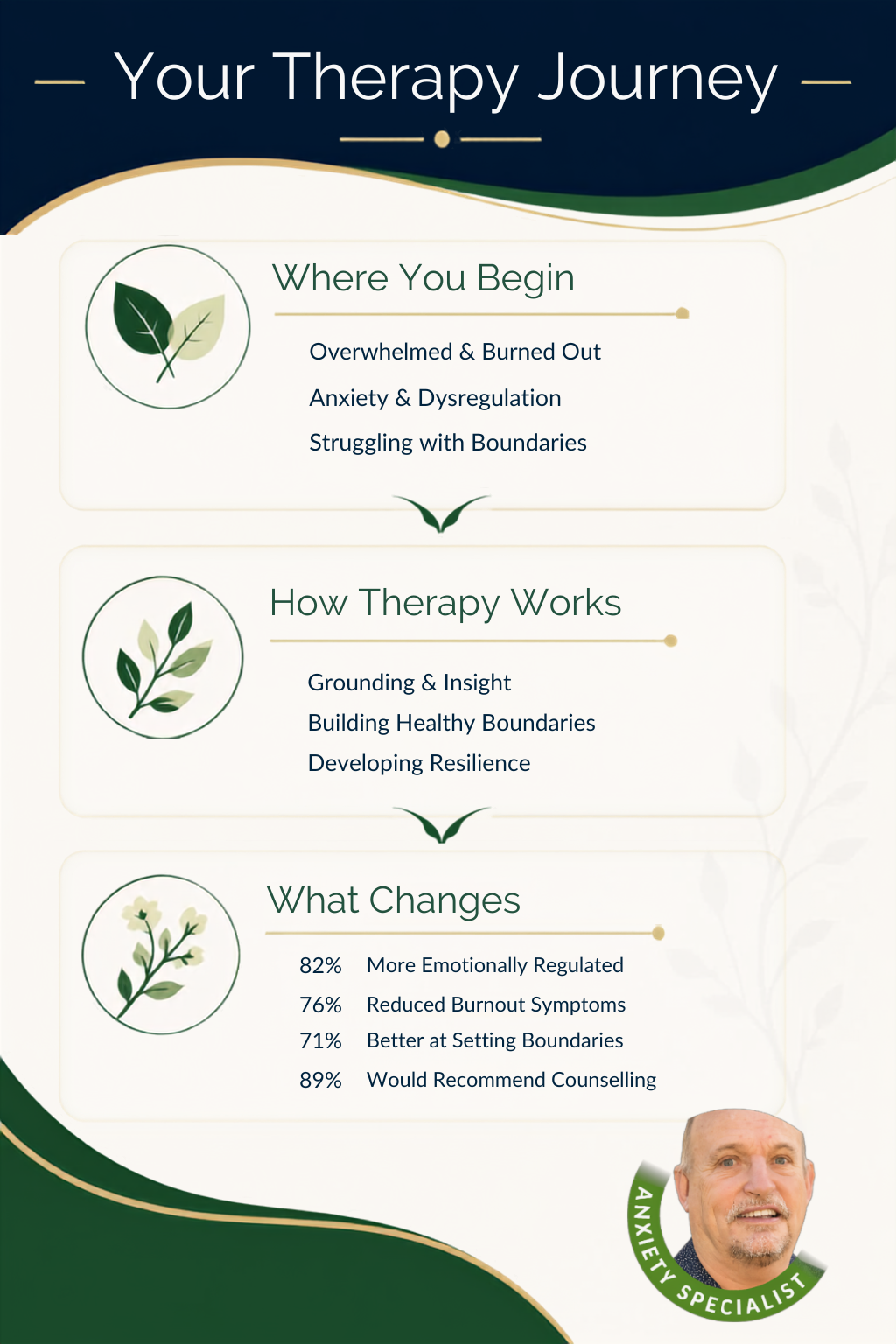
If you’ve been asking yourself for some time what a life worth living truly looks like, you may find the beginning of your authentic pathway here. This space is designed for anyone seeking clarity, growth, or a deeper sense of alignment in both professional and personal life. Welcome to my approach to the Growth Model, a pluralistic framework that enables me to introduce modalities tailored to the client's requirements. I developed the Growth Model to support real, sustainable change. It is person‑centred, placing you at the heart of the work as the expert of your own life, with a solution‑focused approach that helps you shape a practical, individualised plan for your development. Whether you’re navigating transition, searching for direction, or ready to reconnect with who you truly are, this is a place to begin that journey with intention and support. My fees are modest at £60 per session.
Most people don’t realise how much time, energy, and peace of mind they lose each day to one quiet, corrosive habit: pouring attention into things they can’t control. It’s not a sign of failure; it’s a human response to pressure. However, it fuels anxiety, spikes stress, and makes meaningful work feel heavier than it should. Change should be both rewarding and enjoyable. The mind loops through conversations that didn’t go well, worries about what others think, and tries to predict futures that haven’t even arrived. None of this creates progress. It only pulls you further from the choices and boundaries that would actually help you grow. Stress can be a valuable opportunity to grow and strengthen your resilience. Your brain uses these moments to learn, helping you respond more effectively in the future.
Think about whether your stress has built up over time or comes from an ongoing issue. If it doesn’t seem connected to anything specific, it may be your mind and body signalling the need for rest. Most people want to be liked; it’s human. But for some, the need to be seen positively becomes so strong that they routinely sideline their own needs to meet everyone else’s. Over time, that level of self‑sacrifice doesn’t create connection; it creates resentment, exhaustion, and a quiet dependence on other people’s approval. When we can’t find this craving, the need for approval pulls the person away from themselves in search of external validation.
If this resonates, you may be leaning into people‑pleasing. These individuals are often warm, generous, and deeply caring, but they give so much that they slowly disappear from their own lives. When your energy is spent keeping others comfortable, your mental health pays the price, and the cost becomes impossible to ignore.
A good life doesn’t always need a dramatic overhaul; sometimes it just needs a gentle recalibration. Many people are already living with solid foundations, meaningful relationships, stable routines, and a sense of purpose, yet still feel a quiet tug that something is slightly out of alignment. It’s not failure, and it’s not a crisis. It’s simply the mind and body signalling that a few habits, boundaries, or priorities need to shift so life feels more like it fits who you are now, not who you were five years ago.
These small adjustments often create the biggest impact. A little more rest, a clearer boundary, a slower pace in the morning, a return to a forgotten value, or a shift in how you respond to stress can turn a “good enough” life into one that feels genuinely nourishing. When you fine‑tune the parts that have drifted off-centre, you rediscover ease, clarity, and momentum. Life is already good, you’re just shaping it so it supports you more fully.
Real change begins when you stop outsourcing your power. When you stop living in fear of judgment. When you reclaim your attention from the uncontrollable and bring it back to the present moment, where your influence actually lives. You can’t redo the past, and you can’t act in the future yet. But you can shape what you do right now. Today’s decisions become tomorrow’s reality, and when your focus is constantly pulled outward, life ends up being steered by expectations that were never yours to begin with.
Feeling Overwhelmed
In the Workplace
If the load you’re carrying suddenly feels heavier than it used to, it’s rarely just about workload. It’s the emotional labour of holding everything together while ignoring the quiet signals from within. Your body, your mood, and your motivation all begin to speak when something inside is out of alignment. What once felt purposeful starts to feel draining, and the pressure to keep performing pushes you further away from your own centre. At the same time, you may notice that the issue isn’t simply the weight you’re carrying, but the values that no longer sit comfortably within the work you do. Misalignment creates friction, and friction creates fatigue. Burnout is often less about weakness and more about living out of sync with who you are becoming.
I know this pattern from the inside. The story driving my behaviour wasn’t neutral; it shaped every decision I made. It created automatic yeses where a no was needed. It pulled me into every fire drill, every gap, every crisis that wasn’t mine to solve. On the surface, it looked like commitment. Underneath, it was self‑abandonment disguised as leadership until the crash. That realisation is what led me into training as an integrative counsellor at university. I needed something deeper, something truer, something aligned with who I actually was becoming.
In my former role, the habits looked admirable: early starts, long hours, and an open‑door approach to leadership. Yet under pressure, those same habits quietly reinforced exhaustion. Late‑night emails were framed as “staying ahead.” Skipped lunches were justified as “being there for the team.” Taking on work that should have been delegated felt easier than slowing down to teach someone else. These routines weren’t built for renewal; they were built for survival. And survival isn’t a life.
When I finally examined my own boundaries, expectations, and unspoken agreements, the pattern became impossible to ignore. Respect was high, but only because I had trained everyone to rely on me. It looked like strength. Inside, it felt like erosion. My performance was strong, yet big wins felt flat. My influence was real, yet the impact didn’t feel aligned with what mattered most, a values-aligned life. The respect was there, but the personal cost was becoming too high. My honest admission was simple: I didn’t feel broken. I just felt done. But I knew I wasn’t actually done.
This is the quiet crisis many high performers face. They’re not finished; they’re misaligned. Their internal system is flashing warning lights, but they haven’t been taught how to read them. And this is where counselling becomes powerful. Counselling isn’t about fixing you; it’s about helping you realign with yourself. It’s about reclaiming your attention from what drains you, reconnecting with what matters, and rebuilding a life that feels like yours again. Alignment is learnable. Renewal is possible. And the moment self‑abandonment ends, life stops being something you endure and becomes something you can finally inhabit. What are you protecting yourself from that is effectively keeping you stuck?
Authentic connection softens anxiety in a way that techniques alone can’t touch. My counselling involves both mind and body signalling to the nervous system that it is safe enough to settle, breathe, and return to the body. When someone feels genuinely seen rather than evaluated, their physiology shifts: shoulders drop, breath deepens, and the mind stops scanning for threat. From that steadier place, confidence becomes less of a performance and more of a natural expression of who you are. In both professional and working life, this kind of grounded connection restores clarity, strengthens boundaries, and allows people to show up with a quiet authority that doesn’t need to be proven. It’s the difference between surviving the day and moving through it with presence, intention, and a sense of inner coherence. Tuning in to who you really are begins with a deliberate slowing of pace and a letting go of people-pleasing and seeking external validation in favour of the needs of the self, a softening of the internal noise that so often drowns out your own truth and worth. When you pause long enough to feel your breath, your body, and the subtle signals beneath the surface, authenticity stops being a concept and becomes a lived sensation. In that quieter space, you can distinguish what is genuinely yours from what has been shaped by expectation, comparison, or inherited pressure. This is the moment where alignment begins, not through force, but through recognition. As the nervous system steadies, clarity emerges, and you start to sense the contours of your own values, instincts, and direction.
You don’t have to spend another moment surrendering your inner world to forces that never earned the right to shape you. At any point, including this one, you can choose to step back into your centre, reclaim your breath, and anchor yourself in what is within your control: your values, your boundaries, your direction. Mood, pressure, and negativity may knock at the door from those who don’t want to lose a hold on you, but they don’t get to decide who you are or how you move. Every time you return to your own clarity, you remind yourself that your life is led from the inside out, not the outside in. Once you know what you don’t want or have outgrown, it's easier to develop your future-oriented vision picture.
Use Your Values as Cornerstones
A direction in life doesn’t have to be something we were handed early on or moulded into from birth; it can be something we learn to shape with intention as we grow. The skills for authentic, values‑led living are not innate gifts reserved for a few; they’re practices we cultivate through awareness, courage, and repetition. When we choose to develop our strengths rather than rehearse the old “if only” narratives, we reclaim energy from the past and reinvest it in who we are becoming. Strengths give us traction. Rumination keeps us circling the same ground.
Life moves forward whether we participate or not, and the most empowering choice we can make is to move with it. Each step taken from a place of clarity, even a small one, reinforces a sense of direction that feels earned rather than inherited. When we allow ourselves to grow beyond the familiar patterns that once defined us, we create space for a life that is intentional, coherent, and genuinely ours.
Walking away from a toxic work or personal situation often brings a complicated mix of relief, grief, anger, doubt, and even guilt. Even when you know you made the right decision, your body and mind can still be carrying the impact of what you endured: the self‑questioning, the hypervigilance, the emotional exhaustion, the sense of having lost parts of yourself just to survive it. When these experiences aren’t processed, they can quietly turn inward, showing up as self‑criticism, shame, or the belief that you should have “handled it better.” None of that is a reflection of your worth. It’s simply what happens when someone has been in an environment that asks too much of them for too long.
Counselling gives you a space to untangle those feelings without judgement to understand what happened, to rebuild your sense of self, and to reconnect with the parts of you that were pushed aside in order to cope. If you’re carrying the emotional aftershocks of a toxic situation, you don’t have to work through it alone. You’re welcome to reach out and begin that process at a pace that feels safe and steady for you.
The fact that you are here and got this far indicates you are seeking answers to life’s deeper questions. If the above resonates, consider identifying four of your strongest core values and begin imagining them as the four corner pieces of a jigsaw puzzle. These values inspire your vision; they are the four cornerstones on which all else will be built. Picture the foundation from which your unique life design begins to take shape. What matters to you becomes the material you use to fill in that picture with intention.
From here, authenticity becomes less about performing any external demands and more about relating to your body, your mind, and the parts of you that learned to survive by pleasing, perfecting, or predicting. The inner critic often rises in this territory, echoing old environments that taught you approval had to be earned. Meeting that voice with awareness rather than obedience is a profound act of self-connection. When the body is regulated, you can notice the critic without collapsing back into old patterns, creating space to ask what matters now rather than what will keep you safe. This shift is subtle but transformative: it moves you towards self-correction. You can say to the critic, “It’s OK, you can stand back. I’ve got this.”
As you continue to return to yourself in this way, authenticity begins to flow more naturally through your system. It becomes a kind of internal coherence, a sense that your actions, choices, and boundaries are rooted in something steady rather than reactive. This is where emotional resilience grows. By listening inward, you interrupt old survival patterns and create the physiological conditions for presence, discernment, and choice. You stop abandoning yourself for approval and begin acting from a grounded, values‑led centre.
Over time, this practice becomes a way of living rather than a moment of insight. An authentic connection to self is rarely a single breakthrough; it is a repeated, compassionate inquiry of returning. You notice when you’ve drifted, you listen for what is true, and you come back. With each return, the path feels more familiar. You become less organised around performance and more anchored in who you are. Sustainable transformation happens here, not in becoming someone new, but in remembering yourself fully enough to align with who you were before events reshaped you, trading a life of external validation for one rooted in intrinsic peace, clarity, and a steadier way of being.
If this resonates, counselling can help you step back into the life you’re meant to be living, not the one you’ve been surviving
David Pender
The Growth Model
The Obstacles
Holding You Back
Authentic Connection: Nervous System Regulation